Utilization of Generative AI
Artificial intelligence (AI) is becoming an important tool in education because it helps teachers provide feedback, and evaluate student work. When it is used responsibly and in a controlled manner, it can make learning more personalized. However, AI should support teachers rather than replace them for the benefit of the students.
AI tools can identify grammar mistakes, explain difficult concepts, suggest ways to improve writing, studying, etc. Instead of waiting several days for feedback, students may be able to receive suggestions immediately and use them to revise their work. One major benefit of AI-generated feedback is that it can help students learn at their own pace. It can also save teachers time on tasks, allowing them to spend more time helping students individually. However, AI can also misunderstand a student's response, provide incorrect information, or give feedback that is too generic. Students may also become too dependent on AI instead of developing their own critical-thinking and problem-solving skills.
Academic Integrity
Although AI has benefits, educators must consider academic integrity, fairness, accuracy, and privacy. AI systems can produce biased feedback or treat students unfairly. They can also provide information that sounds convincing but is incorrect. UNESCO (2023) emphasizes the importance of protecting students' privacy, addressing bias, and keeping human judgment central to the use of AI in education. Another concern is originality. A student could have used AI to complete entire assignments. Educators should establish clear rules about when AI is allowed and when students must complete work independently. Teachers understand their students' needs and classroom experiences in ways that AI cannot fully reproduce. The U.S. Department of Education (2023) also recommends keeping humans involved in AI-supported educational decisions.
My Thoughts
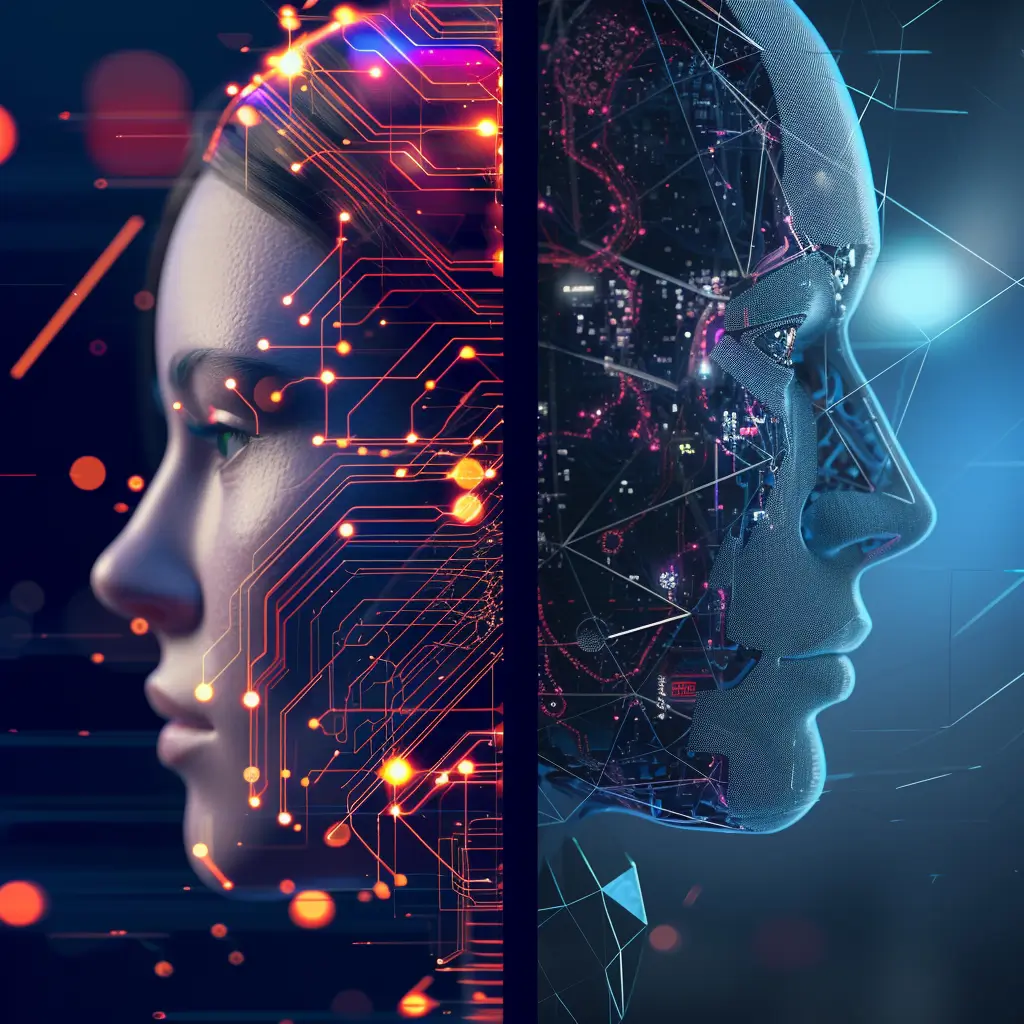
I believe AI can be a useful educational tool when it is used to support learning rather than replace a student's effort. I would use it to help students identify mistakes, receive suggestions for improvement, and review concepts they do not understand. I would also encourage students to compare AI feedback with their teachers' comments and reliable sources. I would also establish several boundaries. First, students should be responsible for their own thinking, ideas, and final work. Second, teachers should review and assess AI-generated feedback before using it to make important grading decisions. Finally, students should be transparent about their use of AI and follow their teachers' rules for each assignment.
Overall, I believe the best approach is to combine the efficiency of AI with the experience, understanding, and judgment of human educators. AI can help students learn from their mistakes, but it should not take away their opportunity to think independently or demonstrate their own knowledge of the material.
References
Miao, F., & Holmes, W. (2023). Guidance for generative AI in education and research. UNESCO. https://doi.org/10.54675/EWZM9535
U.S. Department of Education, Office of Educational Technology. (2023). Artificial intelligence and the future of teaching and learning: Insights and recommendations. https://www.ed.gov/sites/ed/files/documents/ai-report/ai-report.pdf


No comments:
Post a Comment
Note: Only a member of this blog may post a comment.